Selected project / 2025 | present
Tosee
A museum visit that begins with a link, not a plane ticket.
Co-founder / CTO · Product design and engineering
2025 | present
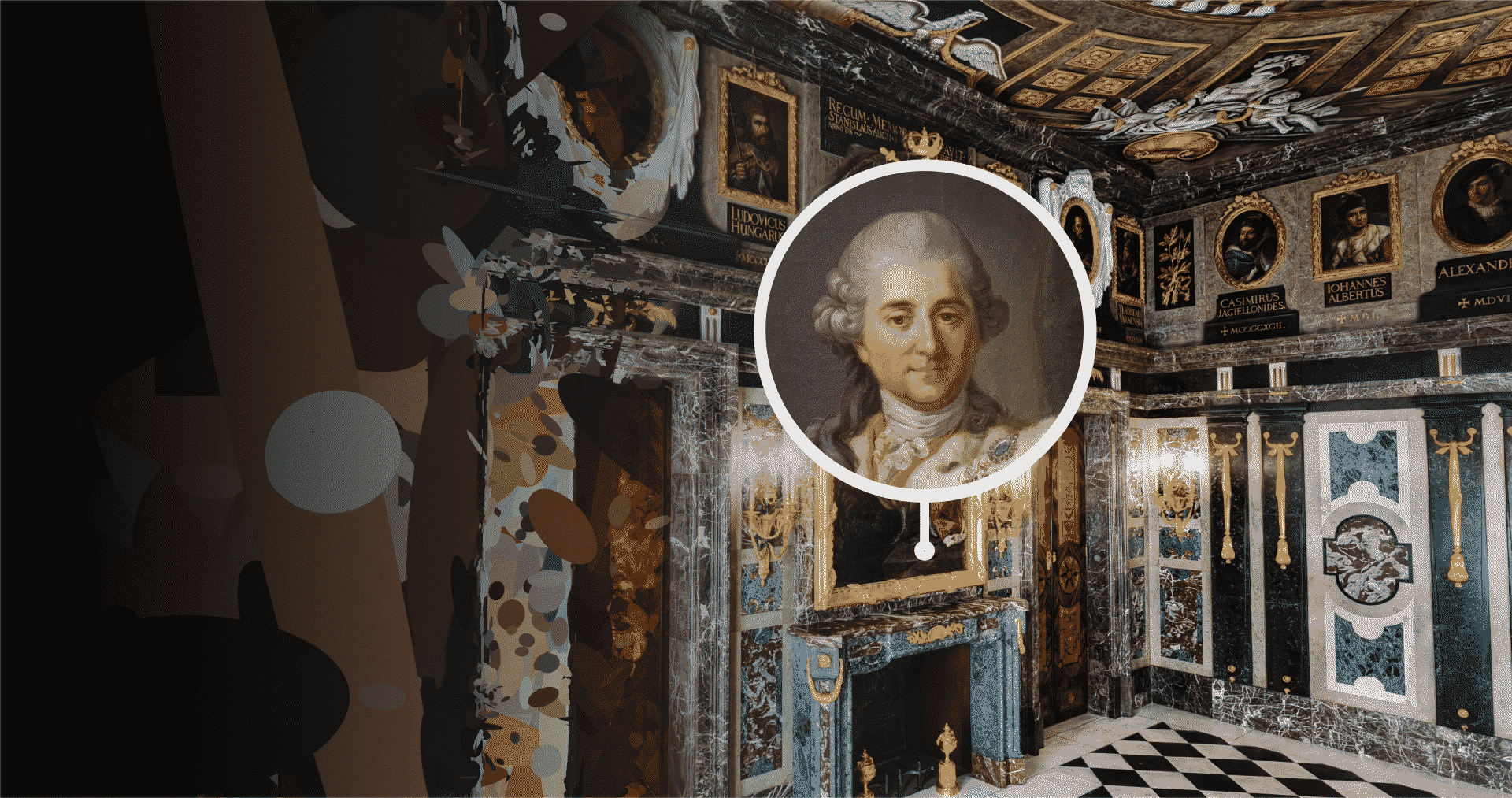
Tosee turns cultural spaces into browser-native virtual visits. A visitor opens a URL and enters a photorealistic room on the device already in their hand. Without installing an app or downloading a game-sized package.
The product is built around a simple business idea: a museum's reach should not end at its doors.
The opportunity
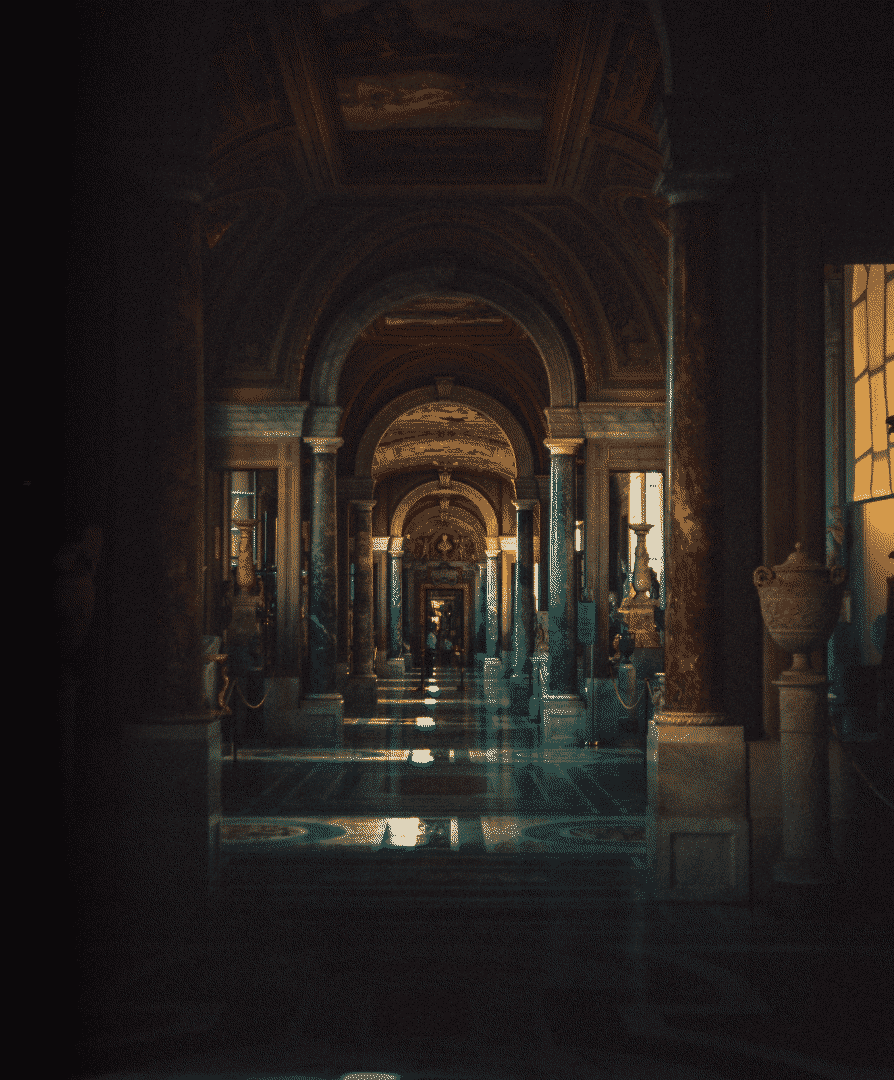
Museums and heritage institutions hold experiences that are scarce by design. The room exists in one city. The exhibition closes. A fragile object cannot stay on display forever. Conventional virtual tours help, but they often flatten the visit into a sequence of panoramas or require heavy 3D delivery that performs poorly on ordinary devices.
Tosee gives an institution another venue: persistent, globally available, measurable, and able to carry the interpretation that makes a collection meaningful. It can support remote visits, education, accessibility, exhibition afterlives, and paid digital access without asking the institution to become a software company.
From capture to visit
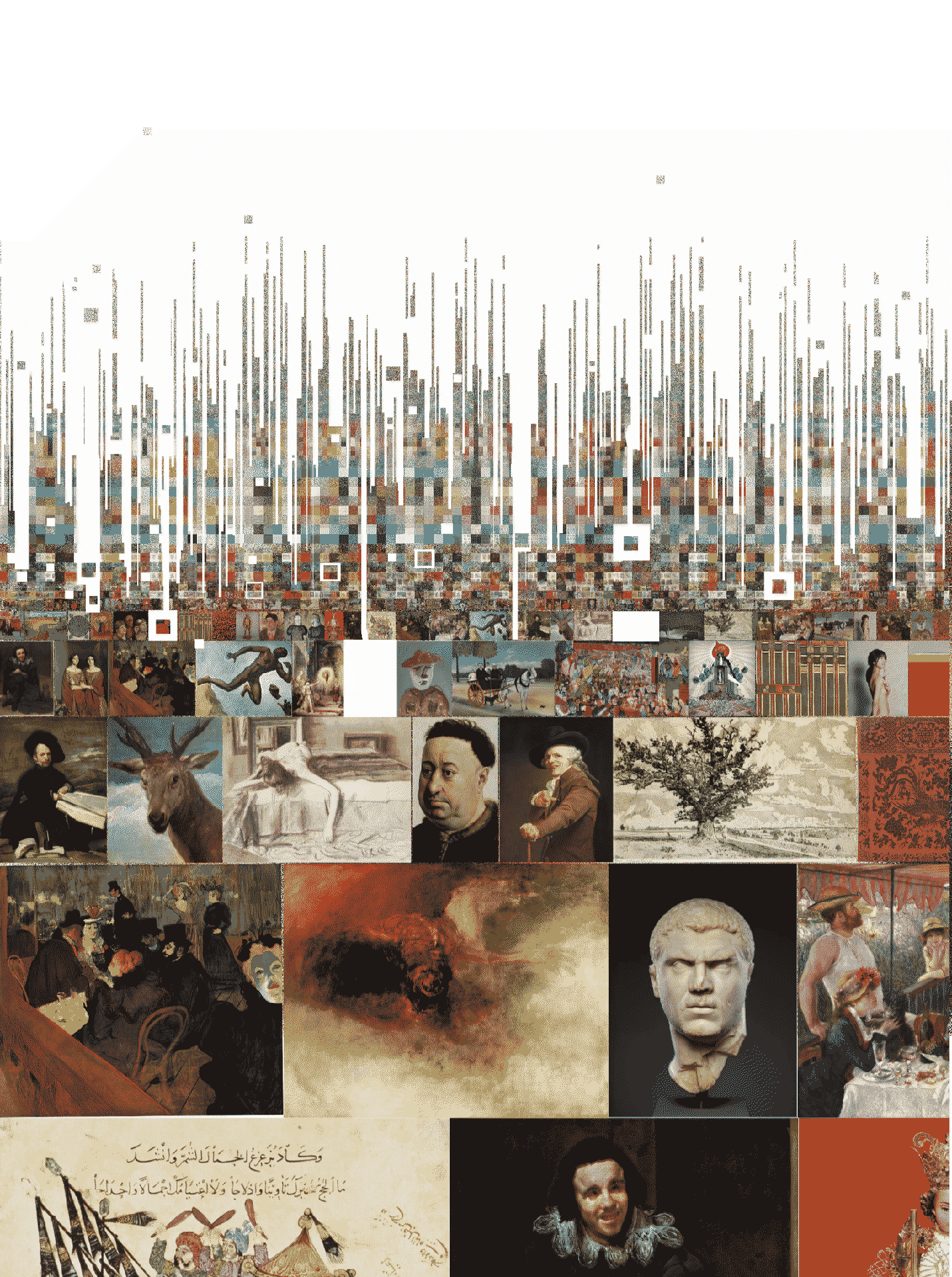
The system turns photogrammetry captures into 3D Gaussian Splatting scenes, compresses them for the web, and delivers them through a real-time WebGL viewer. Inside the scene, institutions can attach audio, text, high-resolution imagery, and navigation points to the objects and spaces visitors are looking at.
The technical pipeline matters because it protects the experience. Visitors see light, material, and spatial detail that conventional meshes struggle to preserve, while the institution distributes a URL instead of an application.
What I built
As co-founder and CTO, I work across the entire product boundary:
- product positioning, identity, interaction design, and interface system;
- the capture-to-publication pipeline for photogrammetry and Gaussian splats;
- the browser viewer, multimedia layer, and performance work needed for mobile delivery;
- the operational bridge between museum requirements and a repeatable digital product.
This is less a virtual-tour feature than a new piece of distribution infrastructure: one capture can keep serving audiences after opening hours, after an exhibition closes, and far beyond the institution's physical catchment area.
Where it stands
The platform is being prepared with major Polish cultural institutions and real collection material rather than demo-only scenes.
We are currently working on a pilotage with National Museum in Warsaw and Royal Castle in Warsaw.